
Basement Waterproofing, Foundation Repair and Crawl Space Waterproofing Professionals
Budget Dry’s basement waterproofing provides each homeowner with the best solution to their basement waterproofing, crawl space waterproofing, and foundation repair problems. Our project managers will come to your home to review your basement situation, detecting basement leaks and identifying the source of the water. Something that’s not always understood by homeowners is that the air quality of a home built on top of a dirty crawl space can be greatly affected by moisture and harmful gasses that are released from the earth. These include the potentially cancer-causing gas Radon, as well as many other less dangerous yet still unpleasant allergens. We are passionate about providing the absolute best service to each home and homeowner we encounter, because we understand just how important your home is to you. We pride ourselves on our excellent customer service and use of cutting edge industry technology. Budget Dry Basement Waterproofing is a leader in Basement waterproofing and basement restoration. Every Basement flood, leak or crack is evaluated thoroughly to ensure that we provide you with the best solution. So you can be secure and confident in the knowledge that Budget Dry treats the problem, not the symptom!
Facts About New Haven
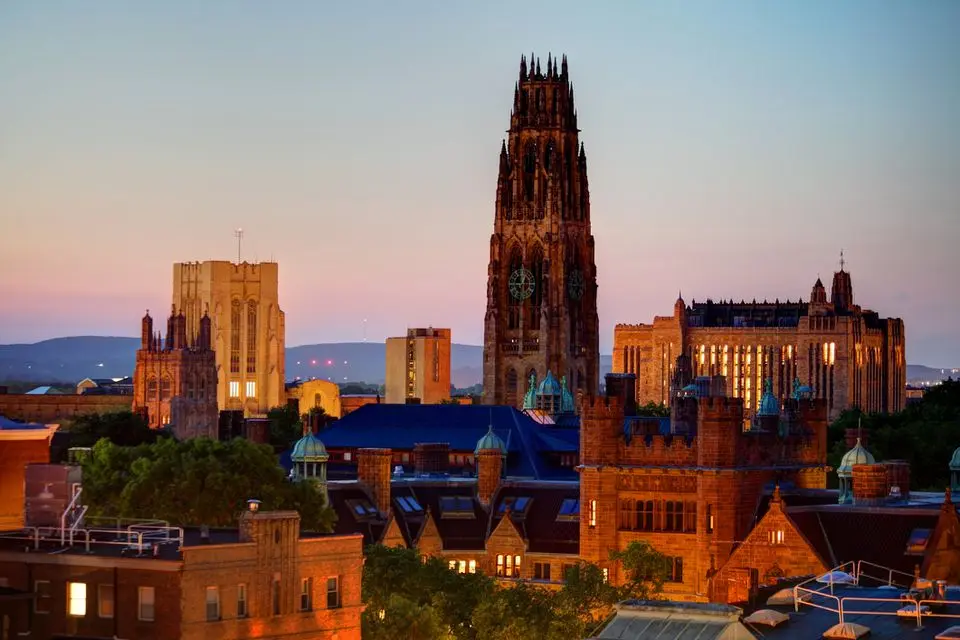
New Haven is a coastal city in the U.S. state of Connecticut. It is located on New Haven Harbor on the northern shore of Long Island Sound in New Haven County, Connecticut, and is part of the New York metropolitan area. With a population of 129,779 as determined by the 2010 United States Census, it is the second-largest city in Connecticut after Bridgeport. New Haven is the principal municipality of Greater New Haven, which had a total population of 862,477 in 2010. New Haven was the first planned city in America. A year after its founding by English Puritans in 1638, eight streets were laid out in a four-by-four grid, creating what is commonly known as the “Nine Square Plan”. The central common block is the New Haven Green, a 16-acre (6 ha) square at the center of Downtown New Haven. The Green is now a National Historic Landmark, and the “Nine Square Plan” is recognized by the American Planning Association as a National Planning Landmark. New Haven is the home of Yale University. As New Haven’s biggest taxpayer and employer, Yale serves as an integral part of the city’s economy. Health care (hospitals and biotechnology), professional services (legal, architectural, marketing, and engineering), financial services, and retail trade also contribute to the city’s economic activity. The city served as co-capital of Connecticut from 1701 until 1873, when sole governance was Before Europeans arrived, the New Haven area was the home of the Quinnipiac tribe of Native Americans, who lived in villages around the harbor and subsisted off local fisheries and the farming of maize. The area was briefly visited by Dutch explorer Adriaen Block in 1614. Dutch traders set up a small trading system of beaver pelts with the local inhabitants, but trade was sporadic and the Dutch did not settle permanently in the area.to the more centrally located city of Hartford. New Haven has since billed itself as the “Cultural Capital of Connecticut” for its supply of established theaters, museums, and music venues. New Haven had the first public tree planting program in America, producing a canopy of mature trees (including some large elms) that gave the city the nickname “The Elm City”.
In 1664 New Haven became part of the Connecticut Colony when the two colonies were merged under political pressure from England, according to folklore as punishment for harboring the three judges (in reality, done in order to strengthen the case for the takeover of nearby New Amsterdam, which was rapidly losing territory to migrants from Connecticut). Some members of the New Haven Colony seeking to establish a new theocracy elsewhere went on to establish Newark, New Jersey. Connecticut Hall, built 1750–1756, is the oldest extant building at Yale. It was made co-capital of Connecticut in 1701, a status it retained until 1873. In 1716, the Collegiate School relocated from Old Saybrook to New Haven, establishing New Haven as a center of learning. In 1718, in response to a large donation from British East India Company merchant Elihu Yale, former Governor of Madras, the name of the Collegiate School was changed to Yale College. For over a century, New Haven citizens had fought in the colonial militia alongside regular British forces, as in the French and Indian War. As the American Revolution approached, General David Wooster and other influential residents hoped that the conflict with the government in Britain could be resolved short of rebellion. On 23 April 1775, which is still celebrated in New Haven as Powder House Day, the Second Company, Governor’s Foot Guard, of New Haven entered the struggle against the governing British parliament. Under Captain Benedict Arnold, they broke into the powder house to arm themselves and began a three-day march to Cambridge, Massachusetts. Other New Haven militia members were on hand to escort George Washington from his overnight stay in New Haven on his way to Cambridge. Contemporary reports, from both sides, remark on the New Haven volunteers’ professional military bearing, including uniforms.
WHERE TO FIND US:
158 Route 81
Killingworth, CT 06419
203-421-8560
800-DRY-2211
(800-379-2211)