
Homes in Killingworth, CT often deal with moisture challenges caused by seasonal rain, fluctuating groundwater levels, and aging foundation materials. Small foundation cracks may seem harmless at first, but when they develop near plumbing or septic pipe penetrations, they can quickly become a source of active water intrusion, mold growth, and long-term structural damage.
Recently, a homeowner in Killingworth contacted Budget Dry Waterproofing after noticing water entering through a foundation crack near a septic pipe. What appeared to be a localized leak required a specialized, multi-step repair approach to stop the moisture and strengthen the wall for the future.
Identifying the Problem: An Active Leak Around a Foundation Crack

The customer was experiencing water intrusion at the bottom portion of a basement wall where a septic pipe penetrated the foundation. Areas surrounding pipe penetrations are naturally vulnerable because openings through concrete create potential weak points over time.
Upon inspection, our team found:
- A foundation crack extending near the septic pipe penetration
- Previous hydraulic cement repairs that had begun to fail
- Signs of active moisture intrusion and water seepage
- Conditions that could eventually contribute to mold growth and elevated humidity
- Increased risk of deterioration if the crack continued expanding
Foundation cracks near utility penetrations require more than a simple patch. Water pressure behind the wall can force moisture through even small openings, making temporary repairs ineffective.
Because the leak had become active, the repair needed to address both waterproofing and structural reinforcement.
Crafting the Right Solution: Multi-Step Foundation Crack Repair in Killingworth
Every foundation issue is different, and this project required several layers of protection to create a durable result.
Step 1: Removing Failed Materials
The first step involved chipping away old hydraulic cement around the septic pipe penetration. Older patch materials often fail over time when exposed to recurring moisture movement.
Removing deteriorated material allowed our technicians to reach the true source of the leak.
Step 2: Epoxy Sealing Around the Pipe and Crack
Once exposed, the affected area around the pipe and crack was treated with epoxy. Epoxy helps create a strong bond and seals vulnerable spaces where water may enter.
This stage helps prepare the damaged area before deeper waterproofing solutions are installed.
Step 3: Poly Foam Injection to Stop Water Intrusion
After moisture began actively leaking during repair, poly foam injection was used to penetrate voids and stop water migration.
Polyurethane foam expands into small openings within the crack path, creating an effective moisture barrier while adapting to minor movement within the structure.
For many active leaks, foam injection becomes a critical waterproofing component.
Step 4: Carbon Fiber Reinforcement for Structural Stability
Stopping water alone was not enough.
To reinforce the repaired section and improve long-term strength, carbon fiber material was installed over the compromised area. Carbon fiber reinforcement is commonly used in foundation repair because it provides additional support without major excavation or wall rebuilding.
This added protection helps reduce future movement and strengthens weakened areas.
Step 5: Resin Protection Around the Pipe and Floor Connection
Finally, resin was applied around the piping area and floor connection to create an additional protective layer against future moisture penetration.
The result was a fully reinforced repair system designed to manage both structural concerns and waterproofing needs.
Delivering Lasting Results for the Homeowner
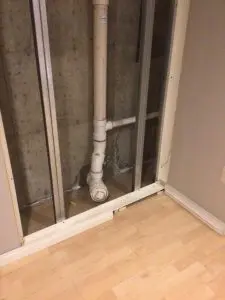
This Foundation Repair project in Killingworth, CT provided much more than a cosmetic fix.
The completed repair helps protect against:
- Future basement leaks
- Mold and mildew growth
- Elevated indoor humidity
- Ongoing deterioration around the septic pipe penetration
- Worsening foundation damage
- Costly structural repairs later on
Addressing foundation cracks early often saves homeowners significant expense compared to waiting until water damage spreads or structural movement increases.
Most importantly, the homeowner now has greater confidence knowing their basement is better protected from recurring moisture issues.
Why Early Foundation Repairs Matter in Killingworth Homes
Foundation cracks rarely improve on their own. Small leaks can become persistent water problems, especially around pipe penetrations where moisture repeatedly finds pathways into the basement.
If you live in Killingworth, CT and have noticed wall cracks, damp basement areas, musty smells, or active leaks near utility lines, professional evaluation can help prevent larger issues down the road.
Budget Dry Waterproofing specializes in identifying the root cause of basement leaks and providing long-term foundation repair solutions designed for Connecticut homes. Early action can protect your basement, your indoor air quality, and the overall value of your property.

Budget Dry is based in Killingworth, Connecticut and has been recognized as the areas leading basement waterproofing and foundation repair company.
We are passionate about providing the absolute best service to each home and homeowner we encounter, because we understand just how important your home is to you. We pride ourselves on our excellent customer service and use of cutting edge industry technology.
Budget Dry Basement Waterproofing is a leader in Basement waterproofing and basement restoration. Every Basement flood, leak or crack is evaluated thoroughly to ensure that we provide you with the best solution. So you can be secure and confident in the knowledge that Budget Dry treats the problem, not the symptom!