
So, you’ve just had your crawl space encapsulated, and you’re probably wondering if a dehumidifier is still necessary. Well, encapsulation definitely helps to curb moisture, but it’s not a foolproof solution, especially if you’re living in a region susceptible to dampness. Humidity can still build up and pose risks, such as mold growth and structural damage. A dehumidifier can control this effectively, but is it worth the investment? Let’s weigh in on the pros and cons to help you make an informed decision.
Key Takeaways
- Even after encapsulation, crawl spaces may still experience moisture issues, making dehumidifiers necessary for maintaining optimal humidity levels.
- High humidity levels can lead to mold growth and structural damage, which dehumidifiers can help prevent by maintaining ideal levels.
- Geographical location influences the need for a dehumidifier, with high-humidity areas like coastal or tropical regions often requiring one even post-encapsulation.
- Dehumidifiers can enhance comfort by reducing musty odors and condensation common in high-humidity crawl spaces.
- Regular maintenance and monitoring of the crawlspace environment is crucial to identify any moisture problems early, which a dehumidifier can help address.
Understanding Crawl Space Encapsulation
In the domain of home improvement, crawl space encapsulation is a method that can drastically improve your home’s energy efficiency and overall health.
It’s a process where a heavy-duty polyethylene barrier is installed to completely cover your crawl space – floors, foundation walls, and possibly even the ceiling. This serves to lock out moisture, pests, and radon gas which can infiltrate your home through the ground.
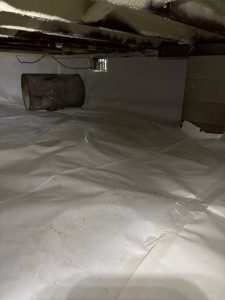
Now you’re probably wondering, “Why should I encapsulate my crawl space?” Well, it’s quite simple.
This process helps to prevent the buildup of moisture, which can lead to mold growth, structural damage, and poor air quality in your home. By creating a moisture barrier, you’re fundamentally keeping these risks at bay.
Additionally, crawl space encapsulation can also improve your home’s energy efficiency.
By sealing off this space, you’re preventing cold drafts and heat loss, which can result in lower energy consumption and costs.
Dangers of Excessive Moisture
Uncontrolled moisture in your home is a silent enemy. You might not notice it at first, but over time, it’s potential to cause damage becomes evident. High moisture levels can deteriorate your home’s structure, ruin your possessions, and even pose serious health risks.
| Dangers of Excessive Moisture | Examples |
|---|---|
| Structural Damage | Moisture can warp and rot wood, rust metals, and cause paint to peel. |
| Property Damage | If left unchecked, moisture can ruin electronics, furniture, and clothing. |
| Health Risks | Excessive moisture can lead to the growth of mold and mildew, causing allergies and respiratory issues. |
| Pest Infestation | High moisture levels attract pests like termites and roaches. |
| Increased Energy Consumption | Your HVAC system works harder in humid conditions, leading to higher energy costs. |
Therefore, it’s important to control the moisture levels in your home, particularly in areas like the crawl space, where dampness is common. In the next section, we’ll discuss the importance of humidity control in preventing these problems. But for now, just remember – it’s better to prevent the dangers of excessive moisture than to deal with the costly and stressful aftermath.
Importance of Humidity Control
Controlling humidity in your home isn’t just a comfort issue; it’s a matter of protecting your investment and your health. Excess moisture can create a breeding ground for mold and mildew, which can damage your property and pose serious health risks.
If you’ve had your crawl space encapsulated, it’s essential to maintain ideal humidity levels to prevent these issues.
A dehumidifier can be your best ally in this battle. It’s designed to reduce and regulate the moisture level in your crawl space, providing a dry and healthy environment. By doing so, it protects the structural integrity of your home, prolonging its lifespan and preserving its value.
Moreover, a well-controlled humidity level can create a more comfortable living environment. It can help alleviate common issues associated with high humidity, such as musty odors, stuffy air, and condensation on windows.
Evaluating Your Crawl Space Environment
Let’s turn our attention to evaluating your crawl space environment.
First, you’ll need to comprehend your crawl space’s humidity levels.
Next, we’ll touch on the value of proper ventilation and how encapsulation affects moisture in your crawl space.
Understanding Crawl Space Humidity Levels
In the domain of crawl spaces, understanding humidity levels is essential. This isn’t just about comfort, it’s about the longevity of your home.
Humidity refers to the amount of moisture in the air, and in a crawl space, too much can spell trouble.
You see, when humidity levels rise above 60%, it creates an environment conducive to mold growth and wood rot. It’s not just the structural integrity at risk, but your health too, as mold spores can infiltrate your living space.
But how do you know if your crawl space has high humidity? Look for signs like condensation on the walls or a musty smell. In more severe cases, you might notice mold or mildew.
If you want a more accurate assessment, a hygrometer can help. This device measures the amount of moisture in the air. It’s a wise investment, giving you a clear, numerical understanding of your crawl space’s humidity levels.
Importance of Proper Ventilation
Without proper ventilation, your crawl space can quickly become a breeding ground for mold and other moisture-related issues. This is because stagnant air creates an environment that’s ideal for these problems to thrive. It’s crucial for you to guarantee that your crawl space is well-ventilated to prevent these issues from arising.
However, it’s not just about having ventilation; it’s about having the right kind. The goal is to promote air circulation, but not to allow excess moisture in. This balance is essential to maintaining a healthy crawl space environment.
To help you understand the role of proper ventilation, let’s look at a simple comparison in the table below:
| Condition | With Proper Ventilation | Without Proper Ventilation |
|---|---|---|
| Air Quality | Fresh and Circulated | Stagnant and Stale |
| Mold Growth | Minimal to None | High Chance |
| Moisture Levels | Controlled | Uncontrolled |
| Air Temperature | Stable | Can Fluctuate |
| Pest Infestation | Less Likely | More Likely |
Encapsulation’s Impact on Moisture
While ensuring the right kind of ventilation for your crawl space is important, this is just one part of the equation.
Encapsulation plays a significant role in controlling moisture levels in your crawl space. But, how does encapsulation impact moisture, exactly?
- Creates a Vapor Barrier: Encapsulation involves covering your crawl space floor and walls with a heavy-duty plastic vapor barrier. This isn’t just any plastic sheet; it’s designed to prevent the passage of moisture from the ground into your crawl space.
- Eliminates Excessive Humidity: By sealing off your crawl space, encapsulation prevents excessive humidity from seeping in. It’s like adding an extra layer of protection from the outside elements.
- Improves Indoor Air Quality: With less moisture, you’ll have fewer mold and mildew problems, and that translates to better indoor air quality. You won’t be breathing in those nasty fungal spores.
- Preserves Structural Integrity: Over time, moisture can ruin your home’s structure. Encapsulation keeps this destructive force at bay, helping preserve your home’s structural integrity.
Geographic Location and Humidity Levels
You might wonder how your location plays a role in your crawl space’s humidity levels.
The truth is, regional humidity variations can greatly affect the moisture control in your encapsulated crawl space.
Regional Humidity Variations
Often, the need for a dehumidifier after crawl space encapsulation can be influenced by your geographic location and regional humidity levels.
If you live in an area where humidity is high, you’re more likely to need a dehumidifier. But remember, not all regions are created equal when it comes to humidity.
Let’s take a look at some of the regional variations:
- Coastal Areas: These regions tend to have high humidity due to the proximity to large bodies of water. If you’re in a coastal city, you’ll likely need a dehumidifier after encapsulation.
- Desert Regions: Here, it’s typically dry and hot. Consequently, the need for a dehumidifier could be minimal.
- Mountainous Areas: The humidity levels in these regions can fluctuate greatly, depending on the altitude and season.
- Tropical Regions: High heat and humidity are the norm, making a dehumidifier almost a necessity after encapsulation.
Post-Encapsulation Moisture Control
Although your geographic location plays a significant role in determining the need for a dehumidifier post-encapsulation, it’s essential not to overlook the importance of ongoing moisture control.
Even in drier climates, it’s possible for moisture to seep into your encapsulated crawl space.
Remember, encapsulation isn’t a one-and-done solution. It’s a proactive measure to keep moisture out, but you must maintain it. You can’t just encapsulate and forget about it. Regular checks are necessary to guarantee the encapsulation remains intact, and there are no leaks or damages causing moisture buildup.
Installing a dehumidifier post-encapsulation can help manage any residual moisture. It works to maintain an ideal humidity level, preventing mold growth and other moisture-related issues.
Humidity levels can fluctuate with changing weather and seasons, and a dehumidifier can help you control this variability.
Home Design and Moisture Accumulation
Your home’s design can play a significant role in moisture accumulation, particularly in areas like the crawl space. This hidden part of your house might seem insignificant, but it’s actually a hot spot for moisture buildup. Why? The answer lies in the way your home is designed.
- Vents: If you’ve got crawl space vents, believe it or not, they might be inviting moisture in rather than keeping it out. That’s because warm, moist air can enter through these vents and condense, leading to moisture accumulation.
- Ground Cover: An uncovered ground can allow moisture from the soil to evaporate into your crawl space. This is particularly true if your home is built on clay soil, which retains water.
- House Slope: If your house is designed on a slope, rainwater can naturally flow towards your crawl space, increasing the risk of moisture buildup.
- Insulation: Poorly fitted or missing insulation can lead to condensation within the crawl space, adding to the moisture problem.
Understanding these design factors, you can see why crawl space encapsulation alone may not be enough to combat moisture. You might still need a dehumidifier after all.
But don’t make any hasty decisions. First, let’s discuss how to assess the quality of encapsulation.
Assessing Encapsulation Quality
Now let’s turn your attention to evaluating the quality of your crawl space encapsulation.
You need to know how to gauge the success of the encapsulation, identify any potential issues and understand how to guarantee proper maintenance.
Getting this right will help you decide if a dehumidifier is necessary after the encapsulation.
Evaluating Encapsulation Success
Once the encapsulation process is completed in your crawl space, it’s essential to evaluate its success.
You’re not just after a clean, new look, but you also want to make certain that your investment has paid off in the form of a healthier, more efficient home.
But how can you tell if the job has been done right?
- Check the Vapor Barrier: A properly installed vapor barrier won’t have rips or tears, and it should be securely fastened to the walls.
It should be thick and sturdy, not thin and flimsy.
- Look for Air Leaks: If you can feel cold or hot air seeping in, it means your encapsulation isn’t as tight as it should be.
- Monitor Humidity Levels: Invest in a hygrometer to monitor the humidity levels.
If they’re consistently below 60% without the need for a dehumidifier, your encapsulation is likely successful.
- Inspect for Condensation: No signs of condensation on the walls, floors or pipes indicate that your crawlspace is well-insulated and the encapsulation is doing its job.
Identifying Potential Issues
Even the best crawl space encapsulation projects can stumble upon a few hitches. When evaluating the quality of your encapsulation, it’s crucial to identify potential issues that might affect its efficiency.
Firstly, you’ll want to check for incorrect installation. This can include poorly sealed seams or inadequate coverage around pipes and fixtures. If you’re still experiencing a damp or musty odor after the encapsulation, it’s a telltale sign of a problem.
Another issue could be the use of low-quality materials. Not all vapor barriers are created equal. If the material is too thin or isn’t resistant to tears, it won’t perform as expected, which could lead to moisture issues down the line.
Also, be mindful of pest infestations. Rodents and insects can damage the encapsulation material, creating openings for moisture to seep through. Regular inspections can help catch any issues early before they become significant problems.
Lastly, inadequate insulation can be a hidden issue. If your crawl space still feels chilly, even after encapsulation, it’s a sign that the insulation isn’t doing its job.
Ensuring Proper Maintenance
While encountering potential issues in your encapsulation project isn’t ideal, guaranteeing proper maintenance can help salvage the situation.
It’s essential to assess the quality of your encapsulation, as poorly completed work can lead to moisture problems, mold growth, and even structural damage.
To guarantee your crawl space stays dry and healthy, follow these steps:
- Regular Inspections: Routinely check the encapsulation for any signs of damage or wear. This could be tears in the plastic, loose seals, or areas of dampness.
- Cleanliness is Key: Make sure your crawl space is free of debris, pests, and dirt. These can damage the encapsulation and create moisture problems.
- Monitor Humidity Levels: Invest in a good quality hygrometer to check the humidity levels. If it’s consistently above 50%, you might need a dehumidifier.
- Professional Help: If you notice any issues, don’t hesitate to call a professional. They can identify the cause and recommend an effective solution.
Benefits of Using a Dehumidifier
Investing in a dehumidifier can bring you a multitude of benefits, especially after encapsulating your crawl space. For starters, it’ll help maintain a healthy moisture level, preventing dampness that can lead to mold and mildew growth. This, in turn, can protect your home’s structural integrity and save you from costly repairs down the line.
Moreover, a dehumidifier can improve the air quality in your home. It doesn’t just extract excess moisture; it also filters out allergens, dust, and other impurities. This can greatly reduce allergy symptoms and provide a comfortable living environment.
Lastly, it can help in energy conservation. A dehumidifier can make your home feel cooler, reducing the need for air conditioning and, consequently, lowering your energy bills.
To summarize, here’s a table detailing the key benefits:
| Benefits | Examples | Impacts |
|---|---|---|
| Prevents Dampness | Mold and mildew prevention | Protects structural integrity |
| Improves Air Quality | Filters out allergens, dust | Reduces allergy symptoms |
| Energy Conservation | Reduces need for air conditioning | Lowers energy bills |
Next, we’ll explore how to choose the right dehumidifier for your needs.
Selecting the Right Dehumidifier
Maneuvering through the maze of dehumidifiers available on the market can feel intimidating.
But don’t worry, with a little guidance, you can confidently choose the right one for your crawl space.

Firstly, consider the size of your crawl space. If it’s large, you’ll need a dehumidifier with a high capacity.
Small crawl spaces can make do with a smaller, less powerful unit. In addition, think about the humidity level. If it’s excessively damp, you’ll need a robust dehumidifier.
Here’s a simple four-step guide to help you make the right choice:
- Measure Your Crawl space: Knowing the exact size will help you identify the right capacity.
- Assess the Humidity Level: Use a hygrometer to determine the humidity level.
- Check Energy Efficiency: Look for Energy Star certified dehumidifiers to save on electricity bills.
- Consider the Noise Level: If your crawl space is near a living area, opt for a quieter model.
Maintenance Tips for Dehumidifiers
After you’ve chosen and installed the right dehumidifier for your crawl space, it’s crucial to keep it in good working condition to guarantee it effectively controls the humidity level. Regular maintenance is key, and there are several tasks you can do to make sure your dehumidifier lasts a long time and works efficiently.
First, it’s important to clean your dehumidifier regularly. This includes wiping the exterior, cleaning the reservoir, and changing the air filter. Also, remember to inspect your dehumidifier for any signs of physical damage or wear and tear, which could impact performance.
Here’s a quick guide to help you remember:
| Maintenance Tasks | Frequency |
|---|---|
| Clean Exterior | Every Two Weeks |
| Clean Reservoir | Weekly |
| Change Air Filter | Every 3 Months |
So, even after encapsulating your crawl space, you shouldn’t let your guard down. Humidity can still creep up, especially in damper regions. Keep an eye on moisture levels and consider a dehumidifier to keep things dry and safe. Remember, it’s not just about preventing mold; it’s about extending your home’s lifespan. Choose the right dehumidifier, maintain it well, and you’ll be providing the best care for your home.

Budget Dry is based in Killingworth, Connecticut and has been recognized as the areas leading basement waterproofing and foundation repair company.
We are passionate about providing the absolute best service to each home and homeowner we encounter, because we understand just how important your home is to you. We pride ourselves on our excellent customer service and use of cutting edge industry technology.
Budget Dry Basement Waterproofing is a leader in Basement waterproofing and basement restoration. Every Basement flood, leak or crack is evaluated thoroughly to ensure that we provide you with the best solution. So you can be secure and confident in the knowledge that Budget Dry treats the problem, not the symptom!