
You’ve heard of basement sealing paint as a potential fix for those annoying basement leaks, haven’t you? Some people swear by its effectiveness, while others claim it’s not the magic solution it’s often made out to be. It’s a tricky subject, with factors like application process, existing moisture issues, and the causes of the leaks all playing a part. Let’s examine this debate and see if we can uncover some answers. Can basement sealing paint truly be your knight in shining armor against basement leaks?
Key Takeaways
- Sealing paint can prevent water entry by filling pores and cracks, creating a waterproof barrier on basement walls.
- User experiences vary, with some homeowners reporting significant dampness reduction post-application, while others still experience leaks.
- Application techniques and conditions, such as ensuring a clean, dry workspace and applying even, multiple coats, impact the paint’s effectiveness.
- Despite its application, sealing paint cannot address severe water pressure, structural issues, or leaks through window wells or floor drains.
- Alternatives like concrete sealers, waterproofing membranes, and full waterproofing systems might be more effective for persistent leaks or moisture issues.
Understanding Basement Leaks
Before you can effectively use basement sealing paint, it’s crucial to understand why basements leak in the first place.
Basement leaks aren’t just a nuisance; they’re a symptom of a problem with your home’s ability to manage water. When it rains, water seeps into the ground around your house. If your home isn’t properly sealed, this water can infiltrate the basement.
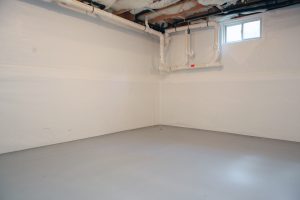
You see, your home’s foundation walls are fundamentally a barrier between the moist soil outside and the dry interior. If these walls aren’t properly waterproofed, water can seep through cracks, holes, or porous concrete. The pressure of water in the soil, also known as hydrostatic pressure, can force water through even the tiniest cracks.
Additionally, poor drainage exacerbates the problem. If water isn’t properly directed away from your home, it can pool around the foundation, increasing the chances of a leak.
Understanding these underlying causes is the first step in addressing basement leaks. Once you’ve identified the problem areas, you can then use basement sealing paint effectively as part of your solution.
And remember, it’s always better to prevent leaks than to deal with them after they’ve caused damage.
The Science of Sealing Paint
Delving into the science of sealing paint can give you a better understanding of how it works to protect your basement. Fundamentally, sealing paint is a waterproof barrier, formulated to prevent water from seeping through the pores and cracks in your basement walls. Its formulation is the key to its effectiveness.
Sealing paint consists of three primary components:
- Resin: This is the binder, or ‘glue’, that holds the paint together and onto the surface. It provides the paint’s adhesion, durability, and water resistance.
- Pigment: This is what provides the color. It’s not just for aesthetics; certain pigments can increase the paint’s ability to resist water.
- Solvent: This is the carrier for the resin and pigment. It allows the paint to be applied as a liquid, which then evaporates as the paint dries and hardens.
Together, these components create a waterproof barrier that adheres to your basement walls, filling in any pores and cracks.
When applied correctly, you’ll get a durable, waterproof surface that can withstand the pressures of water seepage and dampness from the exterior, effectively preventing leaks in your basement.
Application Process Explained
Now let’s get down to the nitty-gritty: the application process.
First, you’ll need to prepare your basement for the sealing paint.
Then, we’ll guide you through the most effective techniques to guarantee a successful and durable seal.
Preparing for Application
Kicking off your basement sealing project requires some upfront preparation. You can’t just slap on the paint and expect it to work miracles. Your workspace needs to be clean, dry, and free from obstructions. You’ll also need to gather the right tools and materials.
Before you start, verify the basement is as dry as possible. Leaking or dampness issues should be resolved beforehand. The sealing paint won’t adhere properly to a wet surface, so it’s essential to dry out the area. Use fans, dehumidifiers, or heaters to speed up the process, if necessary.
Next, clean the walls thoroughly. Sweep away any loose debris and scrub off any mold or mildew. Pay attention to cracks and crevices where dirt can hide. This step is vital for the paint to stick properly.
Finally, gather your tools. Here’s a quick checklist:
- A high-quality brush or roller
- Basement sealing paint
- Protective gear (gloves, goggles, mask)
Paint Sealing Techniques
Once your basement is prepared, it’s time to plunge into the actual sealing process. The first step is to stir your paint well. It’s important to do this slowly to prevent air bubbles.
Then, load your brush or roller with paint, ensuring it’s not too saturated. You don’t want drips!
Start by painting the edges of the area, creating a ‘border’. Use a brush for this, as it allows for more precision.
Once your border is set, use a roller to fill in the center. Work in sections, maintaining a ‘wet edge’ to avoid overlaps and streaks. This means you should begin your next roll before the previous one dries.
Apply the paint generously, but make sure it’s evenly distributed. You’re aiming for a smooth, consistent finish with no thin spots or puddles.
Let the first coat dry thoroughly before applying the second.
Effectiveness of Sealing Paint
Regarding basement upkeep, you might wonder about the effectiveness of sealing paint. Can it really stop leaks? The answer is yes, it can!
Sealing paint forms a barrier against moisture, which is a primary cause of basement leaks. As a waterproofing solution, it can help you maintain the integrity of your basement walls and floor.
It’s vital to note, however, that the effectiveness of sealing paint largely depends on proper application.
To understand how sealing paint works, consider these points:
- Sealing paint isn’t just any ordinary paint. It’s specially formulated to resist water penetration, making it highly effective in preventing leaks.
- It forms a waterproof barrier on the application surface, blocking out moisture. This barrier prevents water from seeping into your basement, thereby protecting your home’s structural integrity.
- Proper application is important. If you apply it correctly, it can greatly reduce the risk of leaks and dampness in your basement.
Potential Limitations and Issues
While basement sealing paint offers considerable benefits, it’s not without its drawbacks.
You might encounter certain limitations with the paint, or run into issues during the sealing process.
Let’s unpack these potential challenges, so you’re fully prepared when tackling your basement project.
Understanding Paint Limitations
Knowing the limitations of basement sealing paint can save you from future headaches.
While it’s often touted as a waterproofing solution, understand that it’s not a cure-all. It’s not designed to handle severe water pressure or fix structural issues.
Sealing paint can only offer a certain level of protection. If water pressure is too high, it won’t be able to hold back the water. It’s also not a fix for cracks or holes. You’ll need other solutions for that.
Some other limitations of sealing paint are:
- It can’t stop water from entering through window wells, floor drains or where the floor and wall meet.
- It’s not a permanent solution. Over time, it can peel, chip or wear away, necessitating reapplication.
- It can’t correct structural issues. If your basement walls are bowing or crumbling, sealing paint won’t fix it.
Dealing With Sealing Issues
Maneuvering through the maze of sealing issues can feel challenging, but understanding potential limitations and problems will arm you with the knowledge necessary to deal with them effectively. It is crucial to recognize that basement sealing paints aren’t a one-size-fits-all solution. A myriad of issues can arise during the sealing process, each requiring your careful attention.
The table below offers a glimpse into some of the common sealing issues you might encounter:
| Sealing Issue | Potential Solution |
|---|---|
| Inadequate Surface Preparation | Ensure the surface is clean, dry and free from loose material. |
| Use of Low-Quality Sealing Paint | Invest in a high-quality, waterproof paint. |
| Incorrect Application Technique | Follow the manufacturer’s instructions closely. |
| Insufficient Drying Time | Allow for adequate drying time before applying additional coats. |
| Extreme Weather Conditions | Avoid painting in extreme temperatures or high humidity. |
Alternatives to Basement Sealing Paint
Believe it or not, there are several other options you can consider instead of basement sealing paint.
You’re not stuck with just one solution. Many times, it’s about finding what suits your unique situation best.
One alternative is using a concrete sealer. These are typically clear and don’t change the appearance of your basement, but still offer protection against moisture infiltration.
Another option you can explore is a basement waterproofing membrane. This is a more robust solution that involves applying a waterproof barrier to the interior or exterior of your basement walls.
Yet another alternative is to undertake a full basement waterproofing system. This is a more extensive and costly solution, but it offers the highest level of protection against water damage.
Here’s a quick rundown of your alternatives:
- Concrete sealers: Clear and unobtrusive, they offer good protection against moisture without changing your basement’s look.
- Waterproofing membranes: These provide a waterproof barrier when applied to the interior or exterior of your basement walls.
- Full waterproofing systems: While more costly and extensive, these offer the highest level of protection.
Real-Life Experiences and Reviews
You might be wondering what others think about basement sealing paint. Well, the opinions are truly mixed. Some homeowners can’t sing its praises enough, while others express dissatisfaction.
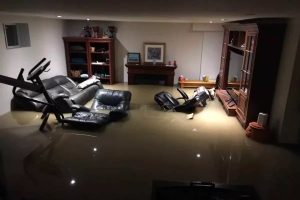
Many have found it to be a real game-changer. They’ve seen significant reductions in basement dampness and moisture after application. For them, it’s made their basements usable again, transforming damp, dank spaces into dry, comfortable rooms.
These people would certainly tell you that basement sealing paint is worth every penny.
However, not everyone has had such positive experiences. Some have reported that, despite applying the paint as directed, their leaks persisted.
They’ve had to resort to more costly solutions, like professional waterproofing services. For these individuals, basement sealing paint was an ineffective and disappointing purchase.
So, can basement sealing paint truly stop leaks? Well, it depends. It can reduce dampness, but may not fix persistent leaks. Remember, it’s essential to tackle underlying issues like poor drainage or foundation cracks first. While it’s a good temporary solution, you may need to explore other waterproofing methods for long-term protection. Review real-life experiences and evaluate all options to guarantee your basement stays dry and usable. It’s about finding what works best for you.

Budget Dry is based in Killingworth, Connecticut and has been recognized as the areas leading basement waterproofing and foundation repair company.
We are passionate about providing the absolute best service to each home and homeowner we encounter, because we understand just how important your home is to you. We pride ourselves on our excellent customer service and use of cutting edge industry technology.
Budget Dry Basement Waterproofing is a leader in Basement waterproofing and basement restoration. Every Basement flood, leak or crack is evaluated thoroughly to ensure that we provide you with the best solution. So you can be secure and confident in the knowledge that Budget Dry treats the problem, not the symptom!