
Steering through the waters of basement waterproofing can feel like a journey into uncharted territory. You might find yourself asking: What are the early signs of water damage? What’s the most effective waterproofing method for my basement? How much is this going to cost me? Is it better to hire a professional or could I do it myself? And once it’s done, how do I keep my basement dry for the long haul? Keep your life jacket on; we’re about to plunge into these pressing questions and more.
Understanding Basement Waterproofing

Confidence in your home’s stability is essential, and understanding basement waterproofing is the first step to achieving that. It’s not just about keeping your basement dry; it’s about protecting your home’s foundation and your investment. Here’s what you need to know.
Basement waterproofing involves techniques and materials used to prevent water from penetrating the basement of a house or a building, ensuring the integrity of your home from the ground up. It can be done on the interior, using sealants and coatings, or on the exterior, also known as positive side waterproofing, which is more effective as it tackles the problem at its source.
Waterproofing is vital because water can cause serious damage to your home’s structure and interior. It can lead to mold, mildew, and rot, which can negatively impact your home’s air quality and your health.
Furthermore, if left unchecked, water seepage can weaken your home’s foundation causing structural damage.
Understanding waterproofing is about protecting your home, your health, and your investment. It’s about being proactive, not reactive.
Signs of Basement Leaks
You may be wondering how to spot signs of basement leaks.
To help you identify basement water damage early, we’ll discuss common leak indicators and how you can prevent basement leaks.
Armed with this knowledge, you’ll be better prepared to protect your home from potential water damage.
Identifying Basement Water Damage
Recognizing the signs of basement water damage is the first essential step to ensuring the longevity of your home’s structure.
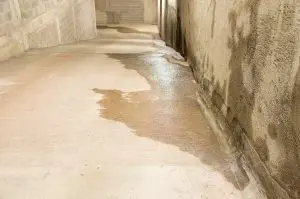
You’ll first want to visually inspect your basement’s walls and floors. Look for water stains or discoloration, which often appear as yellow or brown patches. These stains can indicate past leaks or seepage.
Next, feel the surfaces. Damp, cold, and clammy walls or floors can point towards an ongoing moisture issue. Mold and mildew, too, are telltale signs of water damage. They often show up as dark spots or patches and emit a musty smell. If you spot any, it’s important to address it promptly as it can affect your home’s air quality.
Efflorescence, a white, chalky residue left behind by evaporating water, can also signal water damage. It usually forms on concrete, brick, or stone surfaces.
Peeling paint or wallpaper, warped doors, or rust on metal items are other signs not to overlook.
Lastly, don’t ignore your senses. A damp, musty odor can indicate a hidden water issue.
Common Leak Indicators
Having understood the general signs of water damage in your basement, let’s now focus specifically on leak indicators. You’re probably wondering, “What are the common signs that I’ve a leak?” Often these clues are subtle but knowing them can save you a lot of hassle.
One of the most common indicators is a musty smell. If your basement smells damp and moldy, you’re likely dealing with a leak.
Visible mold on walls, floors or stored items is another sign. This not only indicates a leak, but also a health hazard.
Cracks in the walls or floor might be a direct signal that water is seeping into your basement. Pay extra attention to hairline cracks. They may seem inconsequential but might widen over time, leading to larger leaks.
Also, look for efflorescence, a white or grayish ash on your walls. It forms when water evaporates, leaving behind mineral deposits.
Finally, a hike in utility bills without an apparent reason can hint at a hidden leak. Leaks force your dehumidifier to work harder, consuming more energy.
Understanding these leak indicators can help you catch problems early and avoid extensive damage.
Prevention of Basement Leaks
Often, the best defense against basement leaks is a good offense. This means you should focus on prevention before leaks become a problem. Waterproofing your basement isn’t just a one-time deal; it requires regular maintenance and vigilance.
Firstly, make certain your home’s gutters are clean and functional. They’re designed to channel rainwater away from your foundation, but if they’re clogged or broken, they can’t do their job.
Additionally, make sure the land around your home slopes away from the foundation. Water should always be directed away from your home, not towards it.
Next, invest in a good quality sump pump and keep it well maintained. During heavy rain, a sump pump can be the only thing standing between your basement and a flood.
Regularly check it for issues, especially before a big storm.
Lastly, consider sealing your basement walls and floors. A quality sealant can provide an extra line of defense against water intrusion.
It’s not a foolproof solution, but when used in conjunction with other preventative measures, it can considerably reduce the likelihood of leaks.
Choosing the Right Waterproofing Method
Now that you’ve identified the signs of basement leaks, it’s time to choose the right waterproofing method.
Understanding the different techniques and comparing them allows you to pick the most suitable one for your needs.
Understanding Waterproofing Techniques
What would you say if we told you that choosing the right waterproofing method for your basement could save you from future water damage costs? That’s right, understanding waterproofing techniques is vital to protecting your home.
Waterproofing methods are mainly categorized into two types: exterior and interior.
Exterior waterproofing, also known as positive side waterproofing, tackles water where it originates—outside your home. This method includes installing drainages and applying waterproof barriers to prevent water from seeping into your basement.
On the other hand, interior waterproofing or negative side waterproofing deals with water that’s already entered your basement. It aims to manage this water away from your home’s foundation, typically by redirecting it to a sump pump system.
Remember, each method has its advantages and is suited to different circumstances. Your choice should depend on factors like your home’s construction, the severity of the water problem, and your budget.
It’s essential to thoroughly understand these techniques before deciding on one.
In our next section, we’ll explore deeper into comparing different methods. But for now, you’ve got a basic understanding of how to fight back against water damage.
Comparing Different Methods
Having explored the basic understanding of waterproofing techniques, it’s time to navigate through the complexities of different methods to make an informed decision.
The most common methods include interior, exterior and drainage-focused waterproofing. Each has its own set of merits and demerits.
Interior waterproofing, often called the “negative side” waterproofing, involves applying sealants and coatings to the interior basement walls. While it’s a cost-effective way to prevent minor dampness, it’s not the best solution for severe leaks.
Exterior waterproofing, also known as “positive side” waterproofing, involves excavating the soil around the basement and installing a waterproof barrier. It’s the most effective method but also the most invasive and costly.
Drainage-focused waterproofing is a middle ground. It combines interior sealants with a drainage system to divert water away from the basement. It’s less invasive than exterior waterproofing but more effective than interior alone.
Cost-Effectiveness of Approaches
Choosing the right waterproofing method for your basement goes beyond just looking at the initial installation costs.
It’s about understanding the long-term value and the cost-effectiveness of your chosen approach.
Initially, the price tag of waterproofing might seem intimidating.
However, consider it as an investment against potential future damages. A well-executed waterproofing project can save you thousands in repairs, prevent health hazards from mold, and even improve your home’s resale value.
When evaluating cost-effectiveness, consider three main factors: the extent of the moisture problem, your budget, and the lifetime of the solution.
A cheaper option, such as waterproof paint, might seem appealing, but it’s not a long-lasting solution.
On the other hand, a pricier method like installing a drainage system could provide a lifetime of protection.
Your decision should also be based on your home’s specific needs.
If you’re dealing with minor dampness, a simple sealant could suffice.
However, for more severe issues, like flooding, a thorough interior or exterior approach may be necessary.
Ultimately, an effective waterproofing method is one that offers a balance between cost and long-lasting protection.
Comparing Waterproofing Materials
Though it may seem overwhelming at first, understanding the different waterproofing materials available for your basement can make a big difference in the success of your project. Knowing their features and benefits can help you choose the right one for your needs.
Your first option is concrete sealants. They’re durable, resistant to damage, and suitable for both new and old basements. They create a waterproof barrier that prevents water seepage. However, they may not withstand high hydrostatic pressure and could deteriorate over time.
Next, we’ve got silicate sealers. They penetrate into the concrete and react chemically to form a waterproof layer. They’re long-lasting and resistant to peeling or flaking. But remember, they’re not effective on painted surfaces.
Then, there’s the waterproofing paint. It’s a thicker version of acrylic paint that can block minor leaks and dampness. But it’s not designed to deal with major water issues.
Lastly, we’ve plastic sheets and panels. They’re perfect for keeping water away from your basement’s walls and floor. They’re durable, but installation can be a bit tricky.
Each material has its pros and cons. It’s up to you to decide which one fits your basement’s waterproofing needs best.
Cost of Basement Waterproofing
While the type of waterproofing material best suited to your needs is an essential consideration, it’s equally important to factor in the cost of basement waterproofing. The price can vary greatly depending on a number of factors, including the size of your basement, the severity of the existing water issues, the type of waterproofing method chosen, and regional costs.
On average, homeowners can expect to pay anywhere from $500 to $10,000 for professional basement waterproofing. If you’re dealing with minor issues like occasional dampness, the cost might be on the lower end. However, for more serious problems like standing water or structural damage, you’re looking at a higher price tag.
Keep in mind that this is a long-term investment. While it may seem expensive upfront, waterproofing your basement can save you money in the long run by preventing costly water damage and increasing the value of your home.
Hiring Professional Waterproofers
Steering through the process of hiring professional waterproofers can seem intimidating, but it doesn’t have to be. You want a team that’s skilled, knowledgeable, and has a solid reputation. So, where do you start?
First, do your research. Look for local companies with positive reviews and track records of successful projects. Don’t be swayed by a low price tag; sometimes, you get what you pay for.
Next, validate their credentials. A legitimate company will be licensed, insured, and bonded. Ask for proof. If they’re reluctant to show you, that’s a red flag.
Then, request an inspection and quote. A professional will come to your home, assess your basement, and provide a detailed estimate. This isn’t just a sales pitch; it’s an opportunity to ask questions and understand the process.
Lastly, compare quotes. Look beyond the bottom-line cost. Consider the scope of work, materials used, and warranty offered.
DIY Waterproofing: Pros and Cons
On the other side of the coin, there’s the option to tackle basement waterproofing as a do-it-yourself project.
You’re probably considering this route to save on costs, and indeed, it can be more economical. DIY waterproofing allows you to control the budget and pace of the project. You can choose the materials and methods that suit your needs best.
However, the DIY approach isn’t always the best way to go. Waterproofing a basement is a complex task that requires expertise and experience. Making a mistake can lead to serious problems down the line, including structural damage and mold growth.
Plus, it’s a time-consuming project that can distract you from other important tasks.
Also, DIY waterproofing solutions tend to be less durable than professional ones. They may seem effective at first, but they often fail to stand up to long-term wear and tear.
This means you could end up having to redo the work sooner than expected, which can offset any initial savings.
Maintenance After Waterproofing
Once your basement has been waterproofed, regular maintenance is key to guaranteeing its longevity.
You’ve invested time, effort, and resources into this project, so it’s vital that you take the necessary steps to keep your basement in pristine condition.
Firstly, keep a regular inspection schedule. Every few months, check your basement for signs of moisture or leaking. Even the best waterproofing jobs can deteriorate over time, and early detection is your best defense against potential damage.
Look for any changes in the walls, floors, or ceiling that might indicate a problem, such as mold, damp patches, or condensation.
Secondly, make sure your gutters and downspouts are functioning properly. They play a critical role in directing rainwater away from your home’s foundation.
Regularly clean them and make sure they’re not clogged with leaves or other debris.
Lastly, maintain the landscape around your home. Sloping your yard away from your home can help prevent water from pooling near the foundation.
Also, remember to keep plants and shrubs at least a few feet away from your home to avoid root intrusion.
Adhering to these maintenance tips will help keep your basement waterproofed for years to come.
Dealing With Waterproofing Issues
Despite your best efforts, waterproofing issues may still arise, turning your basement sanctuary into a homeowner’s nightmare. You may have followed all the guidelines for basement waterproofing, yet find yourself dealing with dampness, water seepage, or mold growth. When this happens, don’t despair. It’s essential to remain proactive, identifying and addressing the root cause of these issues swiftly.
Firstly, check for signs of external water leakage. Cracks in the foundation, clogged gutters, or improper grading can lead to water seeping into your basement. It’s vital to repair these promptly.
If there’s no visible external leakage, consider your internal plumbing for possible leaks or condensation issues.
Secondly, assess the effectiveness of your current waterproofing system. It’s possible it may not be adequate for your home’s specific needs. Consult with a waterproofing professional who can provide expert advice and possibly recommend a more suitable solution.
Lastly, monitor your basement’s humidity levels. High humidity can create a damp environment even without visible water leakage. Invest in a good dehumidifier to maintain a dry environment.
In the end, basement waterproofing isn’t just a drop in the bucket—it’s a lifeline for your home’s foundation. Don’t let your basement become a damp, dreary dungeon. Choose the right waterproofing method, balance the costs, and decide if a pro’s touch or a DIY approach suits your needs. Above all, remember that a well-maintained waterproofed basement isn’t a one-time fix, but a long-term commitment to keep your home high and dry.

Budget Dry is based in Killingworth, Connecticut and has been recognized as the areas leading basement waterproofing and foundation repair company.
We are passionate about providing the absolute best service to each home and homeowner we encounter, because we understand just how important your home is to you. We pride ourselves on our excellent customer service and use of cutting edge industry technology.
Budget Dry Basement Waterproofing is a leader in Basement waterproofing and basement restoration. Every Basement flood, leak or crack is evaluated thoroughly to ensure that we provide you with the best solution. So you can be secure and confident in the knowledge that Budget Dry treats the problem, not the symptom!