
You’ve likely spent time considering various ways to maintain your home’s health, but have you ever thought about the role of basement waterproofing in this strategy? It’s more than just avoiding a flooded basement during a downpour. It’s about preventing moisture-induced problems that can threaten your home’s structural integrity and your own health. Mold growth, a common issue with water intrusion, can lead to serious respiratory issues and allergies. So, isn’t it worth exploring how a dry, well-waterproofed basement can not only increase your property value but also contribute to a healthier living environment?
Understanding Basement Waterproofing
In tackling the issue of basement waterproofing, it’s vital to first understand what it exactly entails. Fundamentally, it’s a preventative measure taken to stop water from entering your basement.

It’s not just about managing an existing water issue but also about preventing potential future problems.
You might be wondering why this is important. Imagine this; you’ve invested a significant amount of time and money into turning your basement into a cozy living space.
But then, an unexpected storm hits, and water starts seeping in, damaging your property, and turning your pleasant basement into a damp, musty nightmare. That’s where waterproofing comes in.
There are several ways to waterproof a basement. The method you choose depends on the specific issues your basement has. These could range from interior water drainage, sump pump installation to exterior drainage, and even full excavation.
You’ll need to assess the situation carefully, or better yet, hire a professional to do so. It’s important to remember, though, that waterproofing isn’t a one-time fix.
It requires regular checks and maintenance to guarantee your basement remains dry and safe.
Health Risks of a Wet Basement
You must be aware of the health risks associated with a wet basement, which can extend beyond mere inconvenience.
The dangers of mold growth, the consequences of structural damage, and the hazards of basement flooding are all critical concerns.
Each of these issues not only threatens the integrity of your home, but also your health and safety.
Mold Growth Dangers
Mold growth in a wet basement poses serious health risks that often go unnoticed. Unbeknownst to you, these fungal intruders can silently creep into your home, thriving in damp, dark environments like your basement. They multiply rapidly, releasing spores that can cause a variety of health issues.
High exposure to mold spores can lead to respiratory problems, allergic reactions, and even severe asthma attacks. Symptoms may include coughing, wheezing, nasal and throat conditions, and eye irritation. The danger increases for individuals with existing respiratory conditions or weakened immune systems. Prolonged exposure can lead to more serious conditions like lung infections or chronic bronchitis.
But the risks don’t stop with physical health. The presence of mold can drastically affect the indoor air quality, creating an unsanitary living environment that can take a toll on your mental wellbeing.
Basement waterproofing isn’t just about protecting your home’s structure; it’s also essential for your health. By keeping your basement dry, you’re effectively creating a barrier against mold growth. In this way, you’re not just waterproofing your basement, you’re safeguarding your family’s health.
Prevention is always better than cure, so it’s time to take action.
Structural Damage Consequences
Beyond the health implications of mold growth, a wet basement can also lead to considerable structural damage over time. The constant exposure to moisture can weaken your home’s foundation, making it susceptible to cracks and shifts.
Water seeping into the basement isn’t just an inconvenience; it’s a serious risk that can compromise your home’s stability. Over time, the excess moisture may cause the wood in your home to rot, which can lead to structural failures. You mightn’t notice this right away, but eventually, you’ll see signs like sagging floors, cracked walls, and doors that won’t close properly.
Moreover, a damp basement creates an ideal environment for pests like termites and carpenter ants, which can cause further damage to your home. Termites, in particular, thrive in damp environments and can cause considerable damage to wood structures.
Lastly, if you’re planning to sell your home in the future, structural damage from a wet basement can considerably decrease its value. Potential buyers might be discouraged by the risk of future repairs and associated costs.
Basement Flooding Hazards
A wet basement isn’t just an architectural concern; it poses significant health risks as well. When your basement floods, it becomes a breeding ground for mold and mildew. These fungi release spores into the air, which you and your family may inhale, leading to health issues like allergies, asthma, and other respiratory problems.
Additionally, standing water can attract pests such as mosquitoes, which carry diseases like West Nile Virus and Zika. It’s not just about discomfort, it’s about your health and wellbeing.
Moreover, if your basement floods frequently, it may create the perfect conditions for toxic black mold to grow. This dangerous mold can cause severe health issues, including memory loss, insomnia, anxiety, and depression.
Lastly, a wet basement can also lead to electrical hazards. Water and electricity are a lethal combination, and if your basement floods, it could lead to situations that risk electrocution or fire.
In short, a wet basement poses more than just structural issues; it threatens your health and safety. That’s why waterproofing your basement is an essential part of a healthy home strategy. Don’t overlook it; your health could depend on it.
Preventing Mold and Mildew Growth
Often, the most overlooked aspect of basement waterproofing is the prevention of mold and mildew growth. This isn’t a minor concern, but one that could potentially harm your home’s integrity and your health. Mold and mildew thrive in damp environments, so a waterproofed basement is your first line of defense against them.
Water seepage can go unnoticed for some time, creating a perfect breeding ground for these harmful organisms. They’ll start as small patches, but given the right conditions, they’ll spread across your basement, damaging your belongings and the structure of your home.
Preventing mold and mildew isn’t just about keeping your basement dry. It’s about maintaining an environment where they can’t survive. Waterproofing your basement involves sealing any cracks or gaps, installing a sump pump for water redirection, and potentially adding a dehumidifier to manage moisture levels.
It’s essential to routinely inspect your basement for signs of mold or mildew. If you spot any, act immediately. Don’t wait for it to get out of hand.
You’re not just protecting your home, but also your health from potential respiratory problems, allergies, and other health issues associated with mold exposure.
Improving Basement Air Quality
Improving the air quality in your basement not only enhances your living condition but also contributes to the overall health of your home.
First, we’ll tackle how to mitigate basement mold growth, which can negatively impact air quality if left unchecked.
Then, we’ll guide you through implementing proper ventilation techniques, a key step to ensuring fresh air circulation and reducing moisture levels in your basement.
Mitigating Basement Mold Growth
In the domain of basement waterproofing, mitigating mold growth plays an integral role in enhancing the overall air quality. Mold spores thrive in damp, dark environments, making your basement a perfect breeding ground if not properly waterproofed. This unwelcome intruder not only compromises the air quality but also poses substantial health risks.
Your first step should be identifying any existing mold. It’s often visible, but musty smells or unexplained allergies can also signal its presence. Once you’ve confirmed mold, don’t panic. It’s manageable. You’ll need to remove any affected materials, like drywall or carpeting.
Remember, replacing these items without addressing the underlying moisture issue won’t solve the problem.
Now, turn your attention to waterproofing. Proper waterproofing is vital to prevent future mold growth. This process may involve installing a sump pump or a French drain system to divert water away from your home.
It’s also essential to seal any cracks or openings in your basement’s walls or floor.
Lastly, consider a dehumidifier, which can help maintain a low moisture environment, discouraging mold growth. However, this device alone won’t solve a severe moisture problem.
Implementing Proper Ventilation Techniques
Proper ventilation is a key factor in improving your basement’s air quality. It’s not just about letting fresh air in; it’s about managing the movement of air to prevent moisture build-up, which could lead to mold and mildew.
Begin by identifying possible sources of air leaks, such as windows, doors, or cracks in the walls. Sealing these can help control the flow of air.
You should also consider installing exhaust fans, particularly if your basement has bathrooms or kitchens. These can extract moist air directly from these areas, preventing it from spreading to other parts of the basement.
Don’t overlook the importance of air purifiers either. They can effectively remove pollutants and improve the air quality. However, they should be used as a complement to other ventilation techniques, not as a standalone solution.
Lastly, consider investing in a dehumidifier. Basements are prone to dampness and high humidity, and this can be a breeding ground for mold. A dehumidifier can help maintain a healthy humidity level.
Effective Waterproofing Techniques
While you may consider it a challenging task, waterproofing your basement can be simplified with a few effective techniques.
It’s all about understanding the various methods available and choosing the one that’s most suitable for your home.
The first step is to identify the source of the water problem. This could be from leaks, condensation, or ground water.
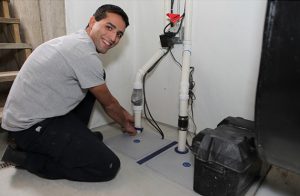
Once you’ve identified the source, you can then select the appropriate waterproofing method.
Interior sealants are a quick fix, ideal for preventing condensation. They’re applied directly to the interior walls and floors of your basement, creating a seal that repels water.
However, they’re not suitable for handling major leaks or groundwater issues.
Exterior waterproofing is more extensive. It involves applying a waterproof barrier to the outside of your basement walls, stopping water before it can enter.
This method is effective but can be costly and requires excavation.
For severe water issues, a drainage system can be installed. This method redirects water away from your home, protecting your basement from any potential water damage.
Maintenance Tips for Waterproofed Basements
Keeping up with your basement’s waterproofing is essential to guarantee its long-term protection from moisture and potential water damage.
Regular maintenance is necessary even after employing effective waterproofing techniques. This will help in preserving the integrity of your home, preventing costly repairs and fostering a healthy living environment.
Here are four maintenance tips for your waterproofed basement:
- Regular Inspection: Always keep an eye on your basement. Look for any signs of moisture, such as damp spots, mold growth, or peeling paint. Early detection of these signs can prevent a minor issue from becoming a major problem.
- Cleaning the Drains: Over time, your basement’s drainage system can get clogged. Regularly clean your drains to guarantee that they function properly.
- Checking the Sump Pump: A functioning sump pump is a vital part of a waterproof basement. Test it regularly to guarantee it’s working efficiently.
- Sealing Cracks: Even the smallest crack can let in water. Regularly check for any cracks or fissures in your basement’s walls or floor and seal them promptly.
Take care of your basement and it’ll take care of you by providing a dry, safe space for you and your family.
In summary, incorporating basement waterproofing into your home strategy is essential. Not only does it protect your home’s structural integrity, it also keeps your indoor air clean and healthy. By preventing mold growth, you’re safeguarding against serious health risks. Plus, you’re boosting your property’s value and creating a safe, dry space. Remember, proper maintenance is key to keeping your waterproofed basement in top shape. Make the smart move – waterproof your basement today.

Budget Dry is based in Killingworth, Connecticut and has been recognized as the areas leading basement waterproofing and foundation repair company.
We are passionate about providing the absolute best service to each home and homeowner we encounter, because we understand just how important your home is to you. We pride ourselves on our excellent customer service and use of cutting edge industry technology.
Budget Dry Basement Waterproofing is a leader in Basement waterproofing and basement restoration. Every Basement flood, leak or crack is evaluated thoroughly to ensure that we provide you with the best solution. So you can be secure and confident in the knowledge that Budget Dry treats the problem, not the symptom!